
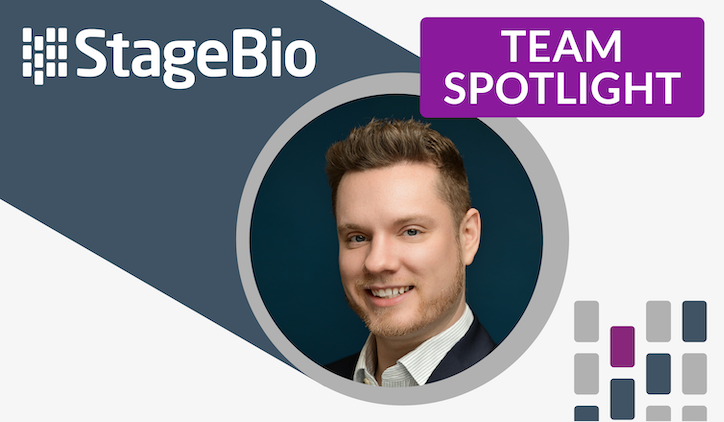


Meet StageBio’s Business Development Director, Garek Wilashko!
1. Can you introduce yourself, share your role at StageBio, and explain what initially drew you to join the team?
Sure, I work with biotech, pharma, CROs, academic consultants, and sponsors, ensuring their drug development programmes are planned and built to meet the right histopathology strategy as they move towards critical decision points. I love what I do! Working with StageBio gave me the ability to directly work with our drug developers, guide strategy, and work towards generating the tissue-level data needed to progress into IND. I particularly enjoy working with our specialists to identify risks, challenges, and guide the best solution for our clients.
2. What does a typical day look like for you at StageBio - from your first client interaction to wrapping up internal collaboration?
I’m always focused on our clients, their projects, what risks and challenges they face, and shaping a solution and guidance to move projects forward. I believe it’s always valuable to start talking, define what data is needed, then work with our pathologists and operational teams to ensure studies are assessed, designed, scoped, and delivered to timelines, endpoints, and regulatory expectations. My focus is ensuring clients receive clear, actionable data that moves their projects forward quickly.
3. How do you see your role supporting both our internal scientific teams and our clients throughout the lifecycle of a program?
I ensure scientific questions and challenges are translated into a clear, executable pathology strategy. Internally, I make sure our teams understand the context: what the client is trying to prove, what decisions depend on the data, and how we can deliver effectively and quickly. This alignment reduces risk and ensures studies deliver meaningful outcomes our clients expect.
4. What types of challenges or questions do clients most often come to you with, and how do you help guide them toward the right StageBio solutions?
Clients are often concerned about whether their studies will generate the right data to support regulatory decisions. They want to know: Are we assessing the right tissues and endpoints? Will this data stand up to regulatory scrutiny? Are we missing anything that could delay progression? I help by aligning pathology strategy with their programme goals, ensuring the study design, biomarkers, and analysis approaches are fit-for-purpose and reduce the risk of rework.
5. Can you share a memorable example of a client engagement where close collaboration led to a particularly strong outcome?
In one case, a client was working under tight timelines with evolving data requirements. By involving our pathologists early, we helped refine the study design, prioritise key endpoints, and implement targeted analysis approaches. This ensured the data generated was both relevant and decision-ready, allowing the client to progress without delay or the need for additional studies.
6. How do you stay fluent in StageBio’s scientific capabilities and technologies so you can effectively translate them for clients?
Staying close to both our scientific teams and the wider industry ensures I can bring relevant, up-to-date solutions to clients. Through regular interaction with our pathologists and attendance at key conferences, I ensure I can translate complex capabilities into clear value, helping clients understand how each approach supports their specific programme goals.
7. From your perspective, what is one common misconception or overlooked consideration drug developers have when planning preclinical programs?
A common oversight is treating histopathology as a late-stage activity. When brought in early, pathology can shape study design, ensure the right endpoints are captured, and significantly reduce the risk of missing critical data that could impact regulatory outcomes.
8. How does engaging StageBio early in development help clients make more confident, lower-risk decisions?
Early engagement allows us to design studies around the right questions from the outset. This ensures clients generate data that is aligned with regulatory expectations, avoids costly repeat work, and provides confidence that their programme is progressing on a solid scientific foundation.
9. As the drug development landscape evolves, what trends or shifts are you seeing in how companies evaluate therapeutic assets, and how is StageBio responding?
Clients are increasingly focused on generating quantitative, mechanistic, and reproducible data. There is less reliance on purely descriptive outputs and more demand for measurable endpoints that clearly demonstrate effect and support decision-making. StageBio supports this through digital pathology, advanced image analysis, and integrated workflows that provide deeper, more defensible insights.
10. For biotech teams selecting a CRO partner, what key questions should they be asking to ensure they’re choosing a true strategic partner rather than a transactional vendor?
Drug developers should be asking: Will this partner help shape my study, or just execute it? Will I have access to scientific expertise throughout? Is the data generated aligned with regulatory expectations? Can they adapt as my programme evolves? The right partner should actively reduce risk and improve outcomes, not just deliver a service.
11. What differentiates StageBio's approach to client partnerships from other CROs you've worked with or encountered in the industry?
StageBio focuses on delivering outcomes, not just outputs. Our clients benefit from direct access to experienced pathologists, integrated workflows, and a clear focus on generating data that supports real decisions, whether that’s progressing a programme or addressing regulatory questions.
12. Can you describe a time when you had to navigate a particularly complex client need that required creative problem-solving?
A client required a complex study delivered within a constrained timeline, with evolving scientific questions. By working closely across teams, we adapted the study design, prioritised key analyses, and ensured the data generated addressed the client's core questions. This flexibility ensured the client received meaningful data without compromising timelines or quality.
13. How do you like to spend your time outside the lab?
I love travelling, sometimes travelling straight to the sun lounger! I love studying in my spare time: reading and learning, particularly about science and history. My ethos is to stay curious and open to new perspectives. Thank you for reading my spotlight, feel free to reach out anytime!
Are you ready to explore how our preclinical expertise can support your development goals?
Connect with our team today.

 513.204.4400


